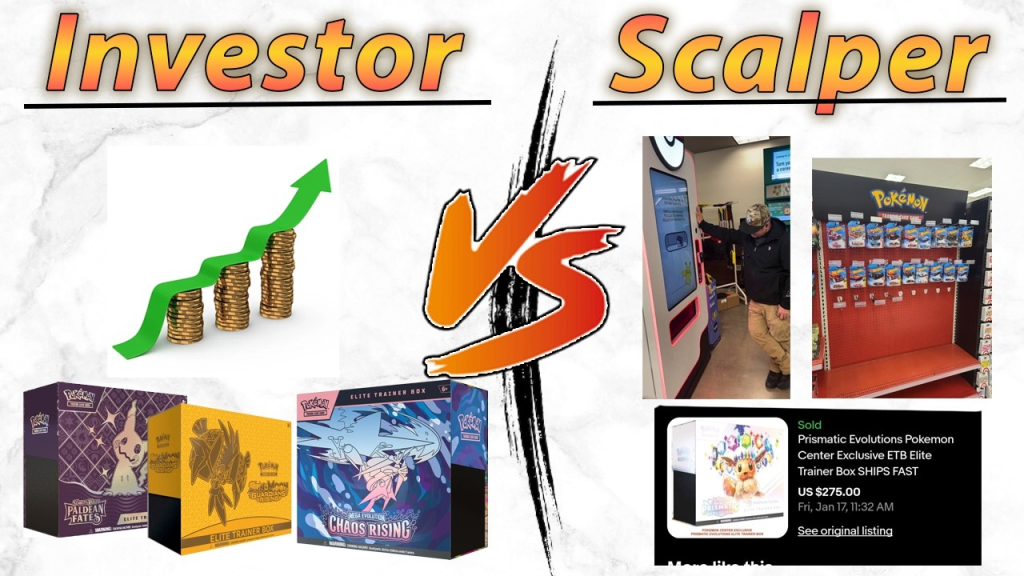
Not every Pokémon investment needs to be held for the same amount of time.
Some people buy cards hoping to sell them within a few months, while others are comfortable holding them for several years.
Long-Term
Long-term investing means holding a card or sealed product for an extended period, potentially several years.
Investors may look for:
- Strong Pokémon popularity
- Beautiful artwork
- Historical importance
- Limited supply
- Strong collector demand
- Older sealed products
- Long-term appeal
The basic idea is:
Buy → Hold → Wait
Pokémon has been around for decades and has generations of fans. Someone who played Pokémon as a child may become a collector years later, creating potential long-term demand.
However, this isn’t guaranteed. A card can remain flat for years or even lose value.
Short-Term
Short-term investing means buying with the intention of selling relatively soon.
Prices can change because of:
- New set releases
- Pokémon announcements
- Popularity
- Social media hype
- Supply changes
- Competitive play
- Major events
For example, a card may suddenly become popular after a new announcement or release.
The Risk of Short-Term Investing
Short-term investing can be harder because prices can move quickly in either direction.
You also need to consider selling costs. If you buy a card for $100 and sell it for $110, you may not actually make $10 after marketplace fees and shipping.
Which Is Better for Beginners?
There isn’t one correct answer.
However, beginners may find long-term investing easier to understand because they don’t need to constantly react to daily price changes.
Before buying, ask yourself:
“If this card doesn’t increase in price for two years, am I okay holding it?”
If the answer is yes, you may be thinking more like a long-term investor.
Short-Term = React to Market Changes
Long-Term = Believe in Future Demand